

Get Home Safe
A private ride home from events outside the city.
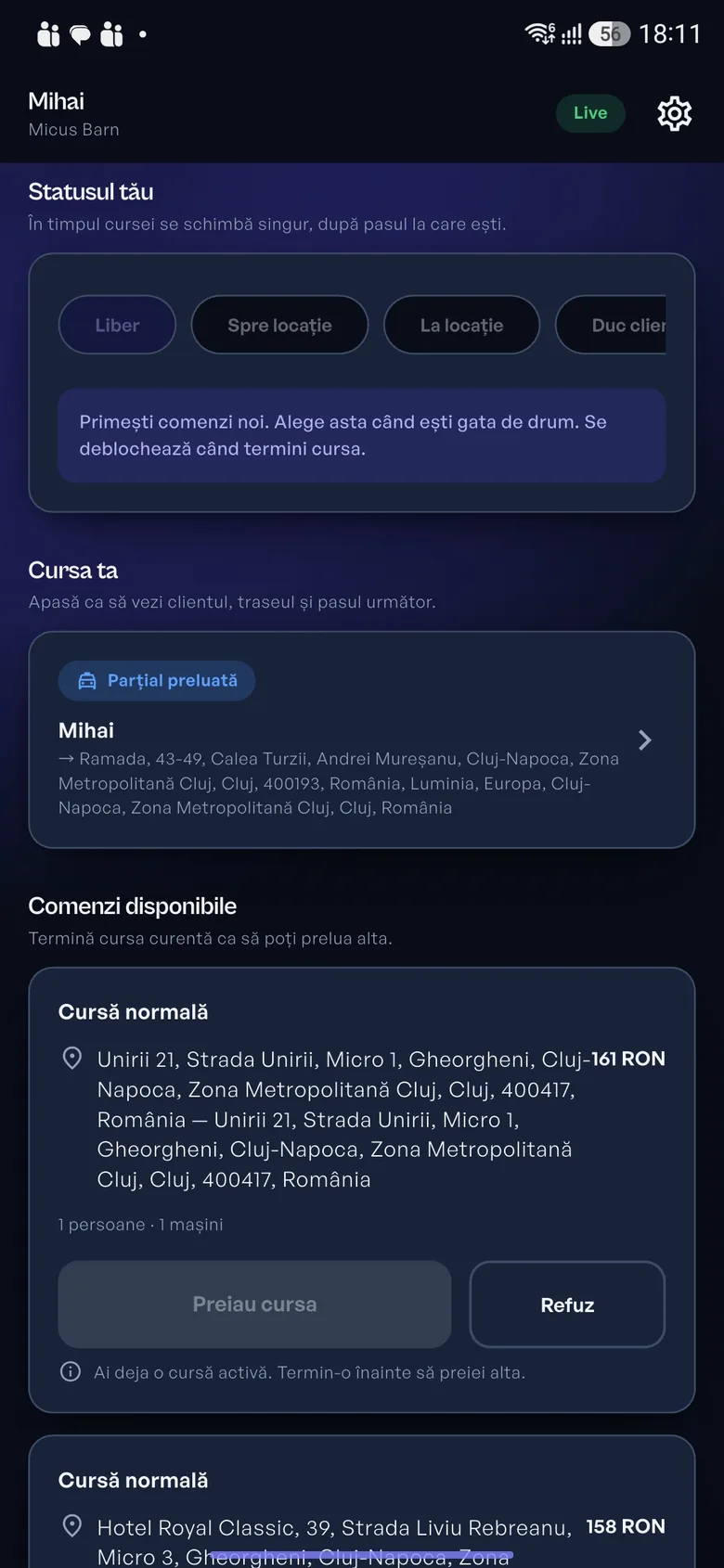
Native Android, for background location and notifications that sound with the phone in a pocket. State, current ride, and available orders with their prices.
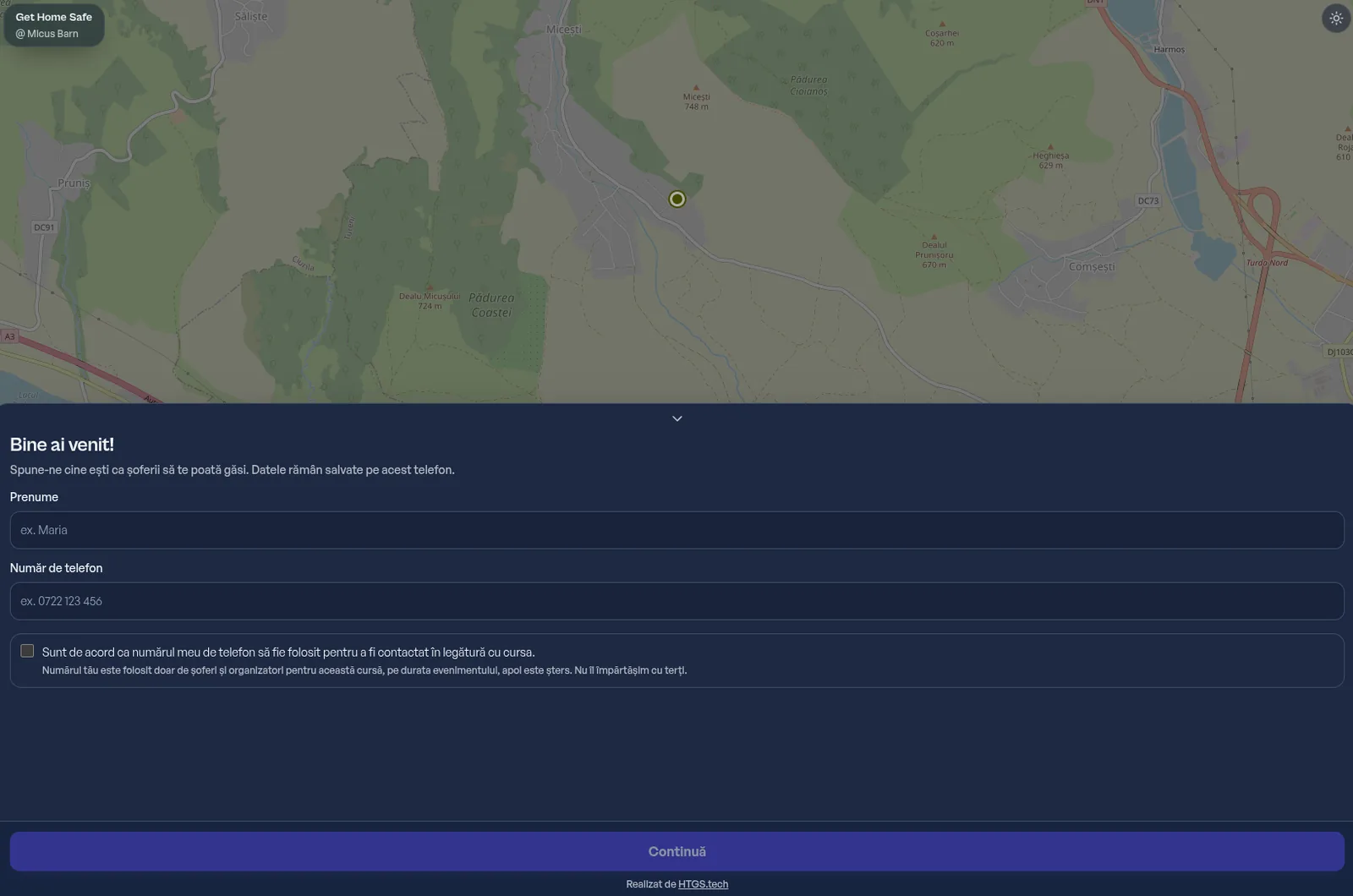
No account and no password. The consent line says exactly who uses the number, for how long, and that it does not reach third parties.
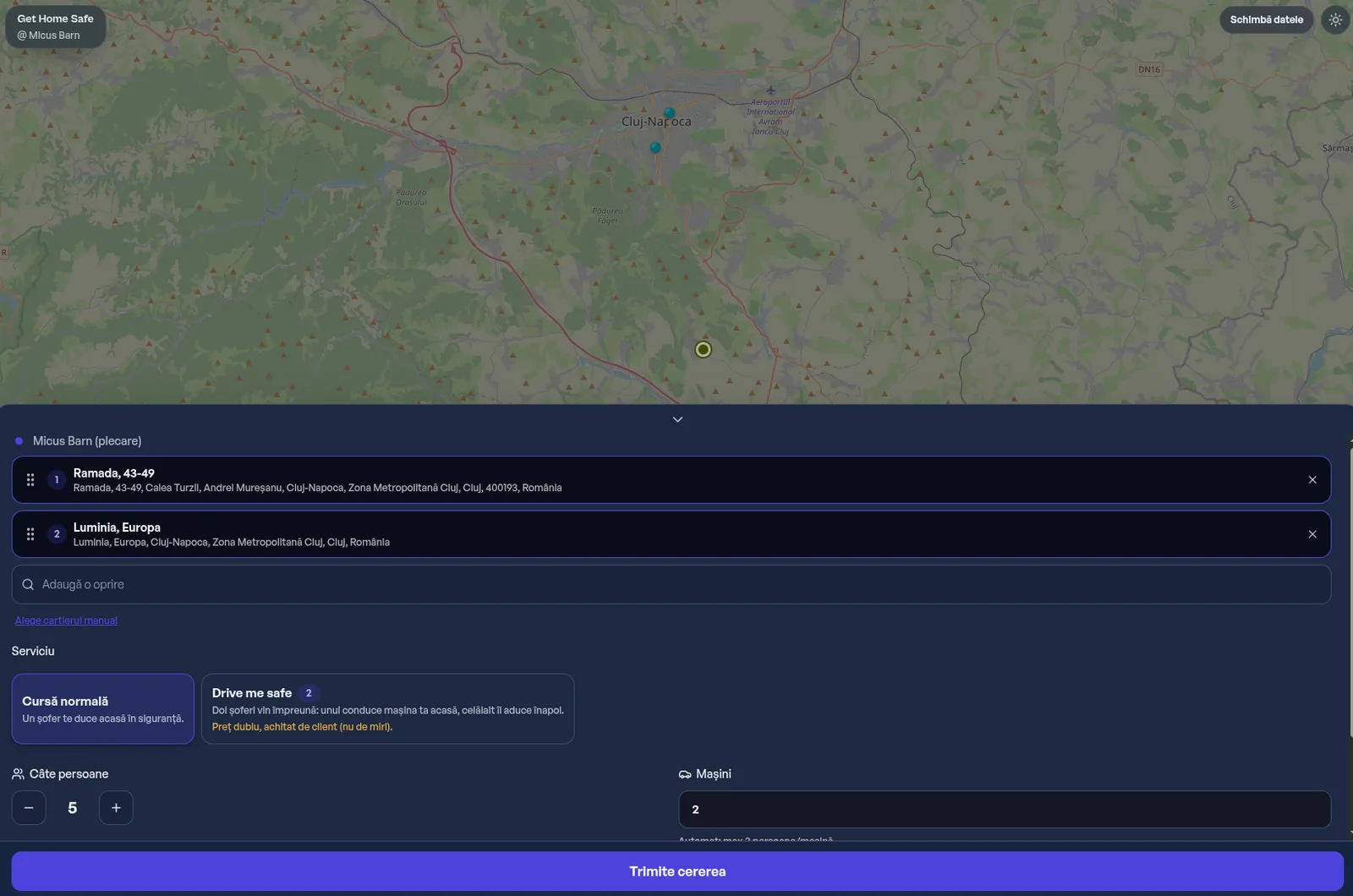
Several destinations in the order you want, and a choice between a normal ride and “drive me safe”, where two drivers bring home both guest and car.
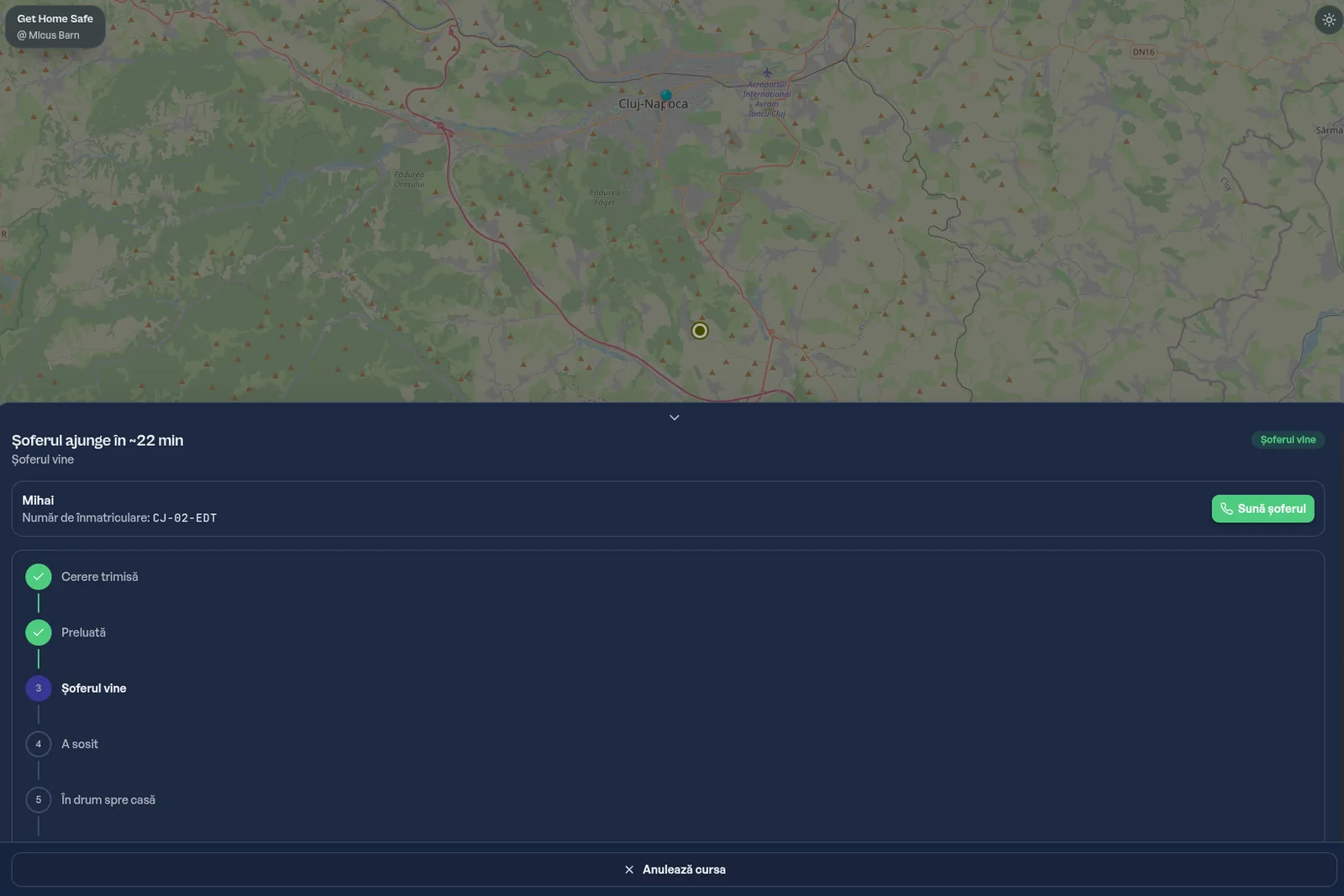
Sent, taken, driver on the way, arrived, heading home — with the registration plate, the estimate, and a button that calls directly.
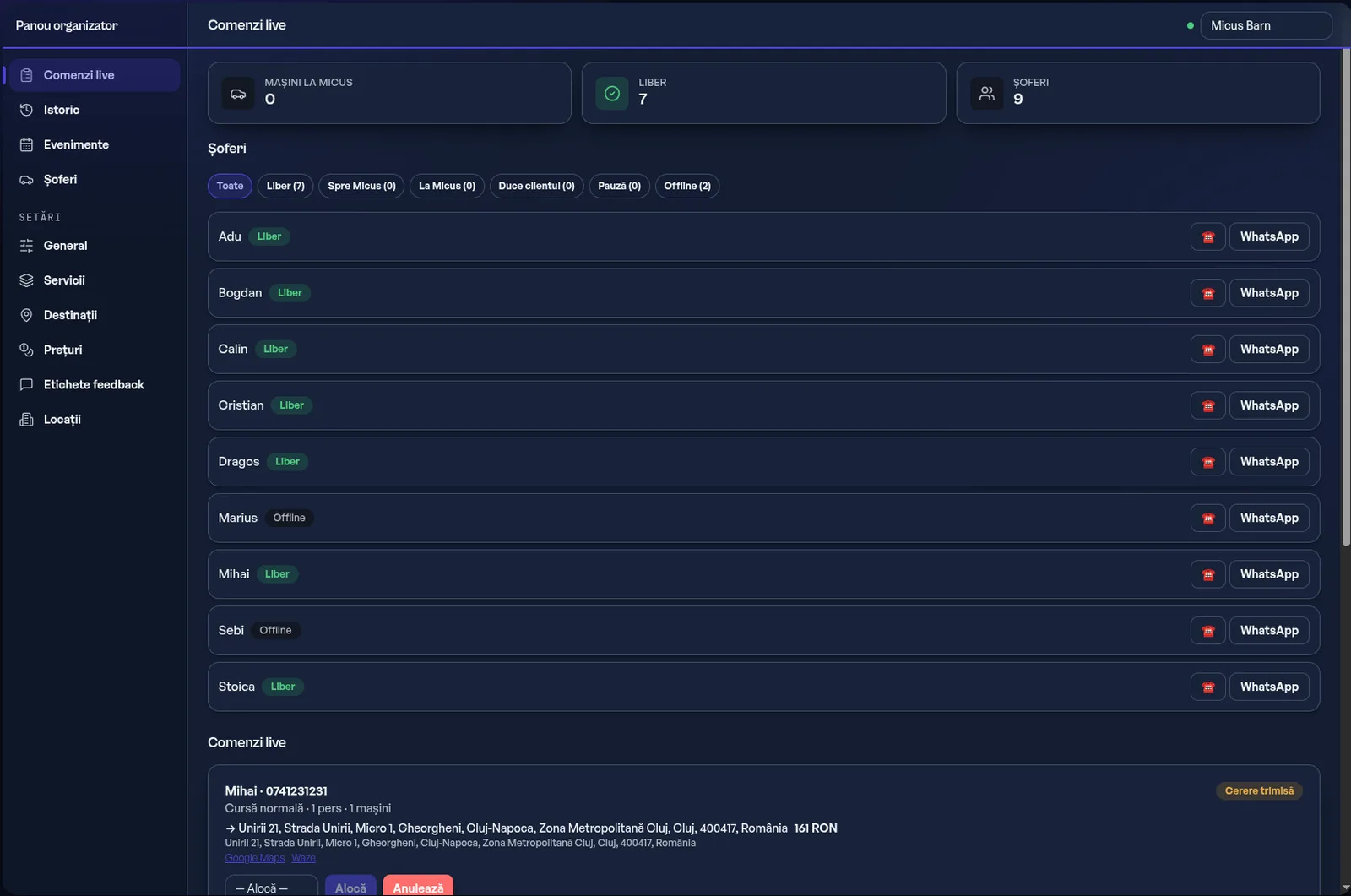
How many drivers are free right now, the roster filtered by state, WhatsApp one click away, and assignment of incoming requests.
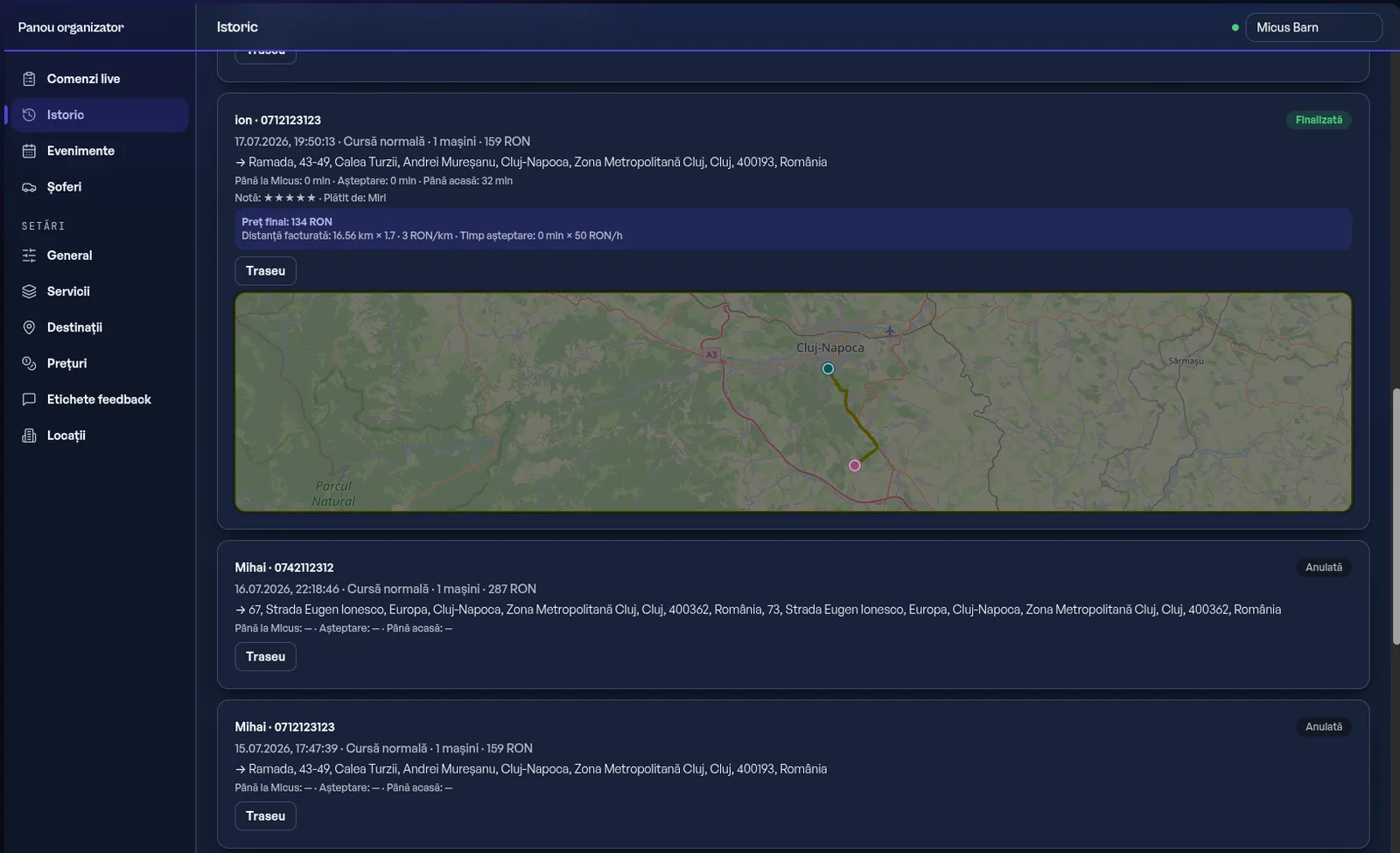
The route on a map, the rating received, and the final price: billed kilometres, per-kilometre rate, waiting time, and who pays.
Native Android, for background location and notifications that sound with the phone in a pocket. State, current ride, and available orders with their prices.
No account and no password. The consent line says exactly who uses the number, for how long, and that it does not reach third parties.
Guests scan a QR code, pick the venue they are at, and ask for a car. There is no account, password or app to install: the first screen asks for a first name and a phone number, with a plain-language explanation of what happens to that number — it is used only by the drivers and organisers, for that night, then deleted, and it does not go to third parties. The details stay on the guest’s phone. The whole flow is three screens wide, because the people opening it are tired and it is dark outside.
A request takes several stops in whatever order you want, with address autocomplete and the option to pick the neighbourhood manually when the signal is not helping. There are two services: a normal ride, where a driver takes the guest home, and “drive me safe”, where two drivers come — one drives the guest’s own car home, the other brings the first one back. The number of people and the number of cars are chosen, with an automatic per-car limit.
Once sent, the guest sees exactly where the request stands: sent, taken, driver on the way, arrived, heading home — with the driver’s name, the registration plate, an estimate that updates itself, and a button that calls directly. They can cancel while cancelling still means something.
The driver side is a native Android app built in Flutter, and not for fashion: a driver needs location reported in the background with the screen off, and a notification that arrives and sounds with the phone in a pocket — two things a web page cannot do reliably. The driver sets their state (free, heading to the venue, at the venue, carrying the client), sees the current ride with its full route and the list of available orders with each price, and takes or declines. The rule is simple and enforced by the app: one active ride at a time.
The organiser gets a live panel: how many cars are at the venue, how many drivers are free, the full roster filtered by state with WhatsApp one click away for each driver, and incoming requests with manual assignment plus direct links into Google Maps and Waze. The history keeps every ride with its route on a map, the rating it received, and the price broken out: billed distance in kilometres times a coefficient, the per-kilometre rate, and waiting time at its hourly rate — plus who pays, the guest or the couple. Prices, destinations, services, venues and feedback labels are configured from the same settings, because the platform serves several venues. A Go backend, PostgreSQL, a fast cache for live ride state, maps from open sources, and the web interface packed straight into the binary. Transport is provided by Transilvania Transfers.
Visit the site