

Remedic
A medical platform in three flavours: Cabinet, Dental and Pet.
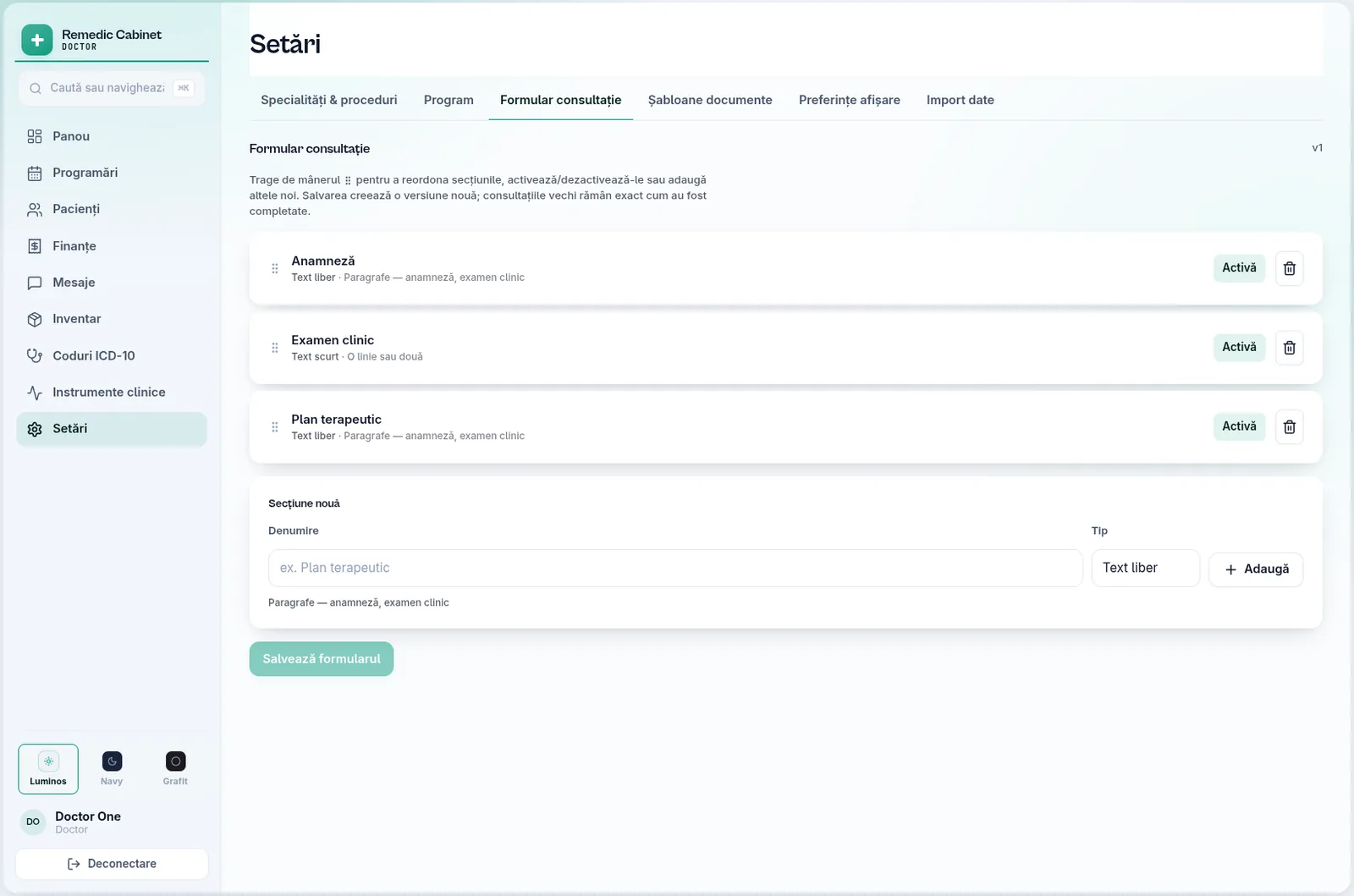
Consultation sections reorder, switch on and get added from settings. Saving creates a new version, and old consultations stay untouched.
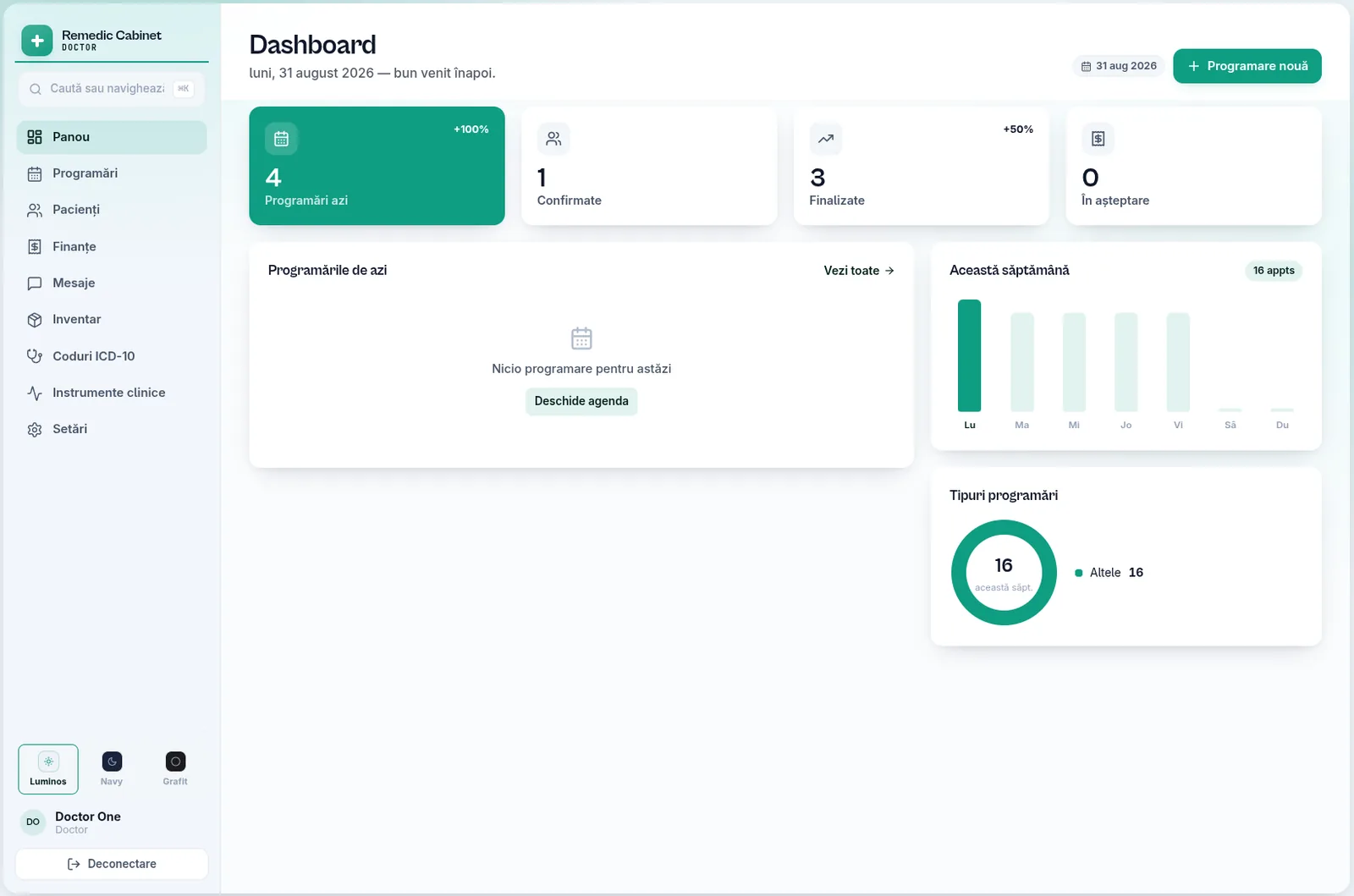
Appointments today, confirmed, completed and pending, with the shape of the week and the split by appointment type.
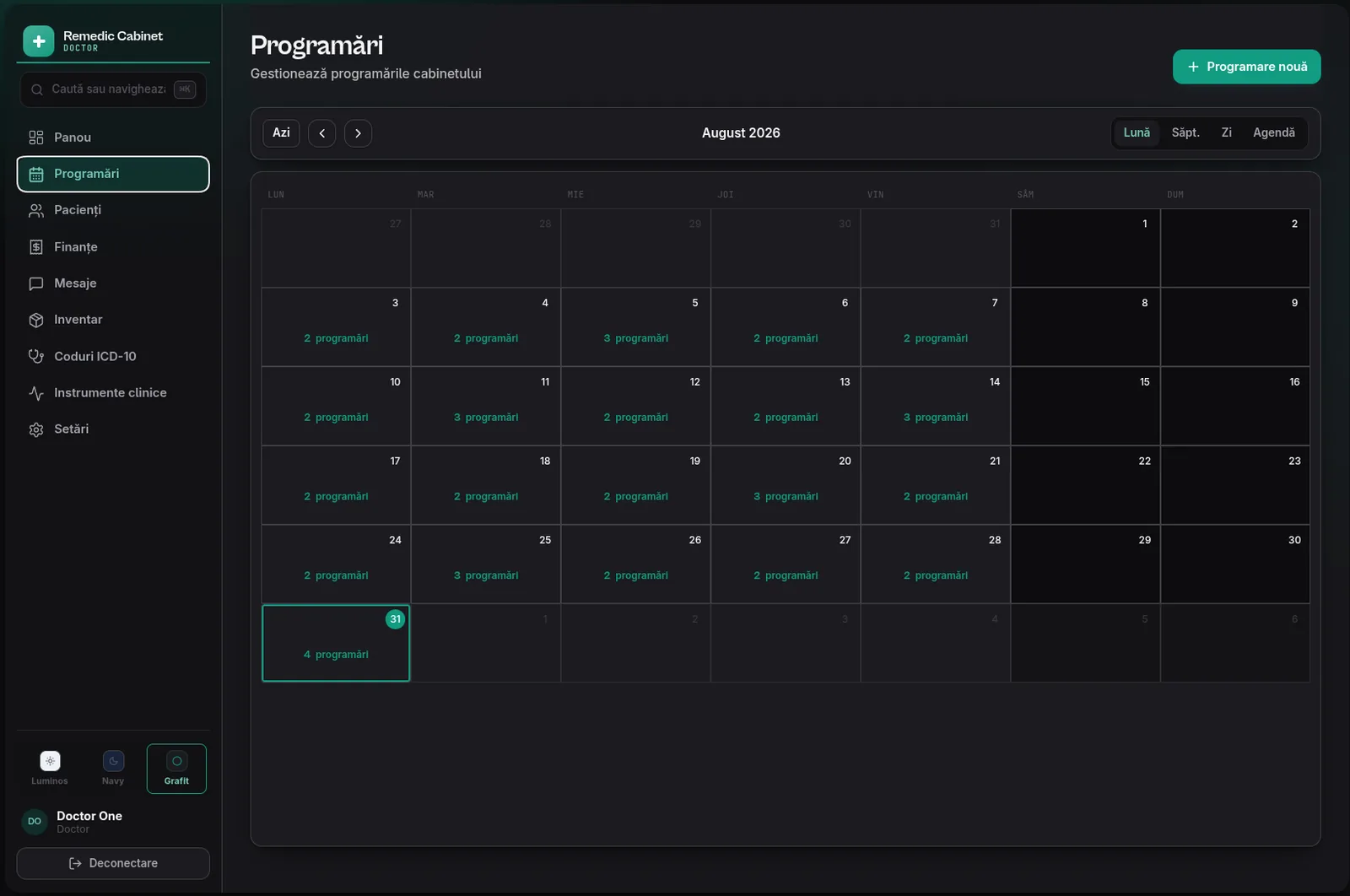
Same application, different theme. Three ship — Luminos, Navy and Grafit — and the choice belongs to the doctor, not to me.
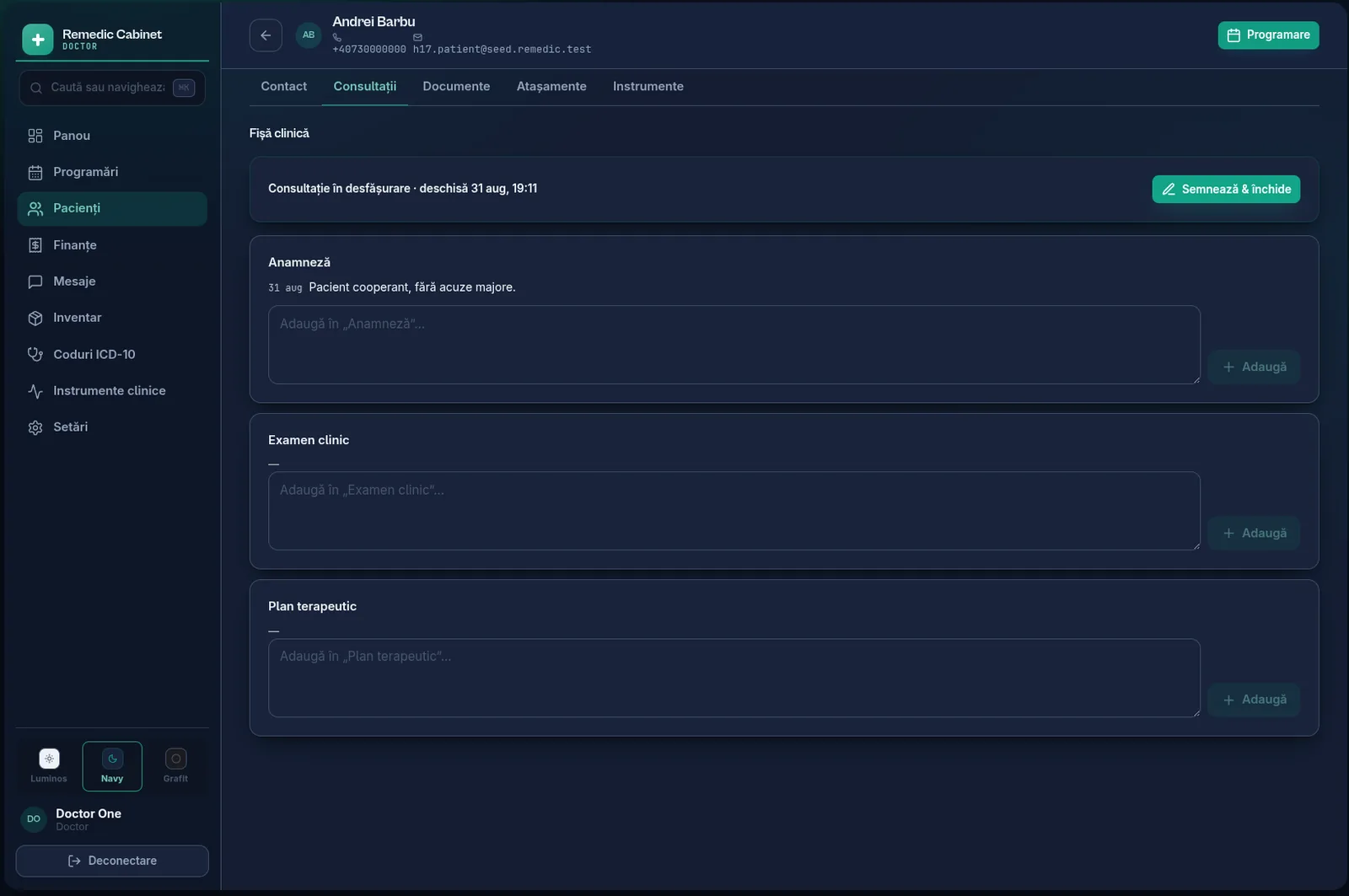
History, examination and treatment plan, filled in by section and closed with a signature. Shown here in the Navy theme.
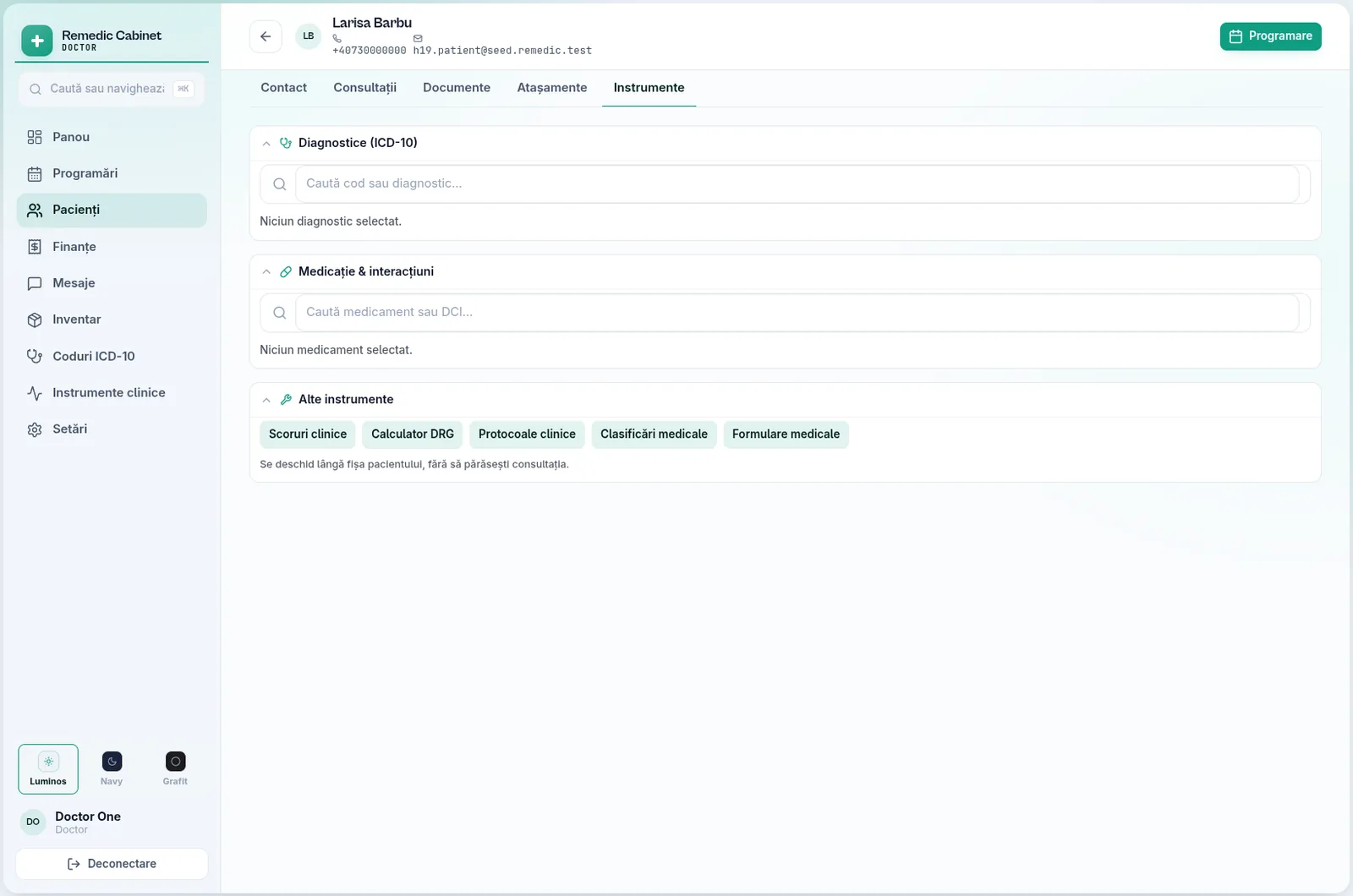
ICD-10, medicines with interaction checking, clinical scores, a DRG calculator and protocols — all opening without leaving the consultation.
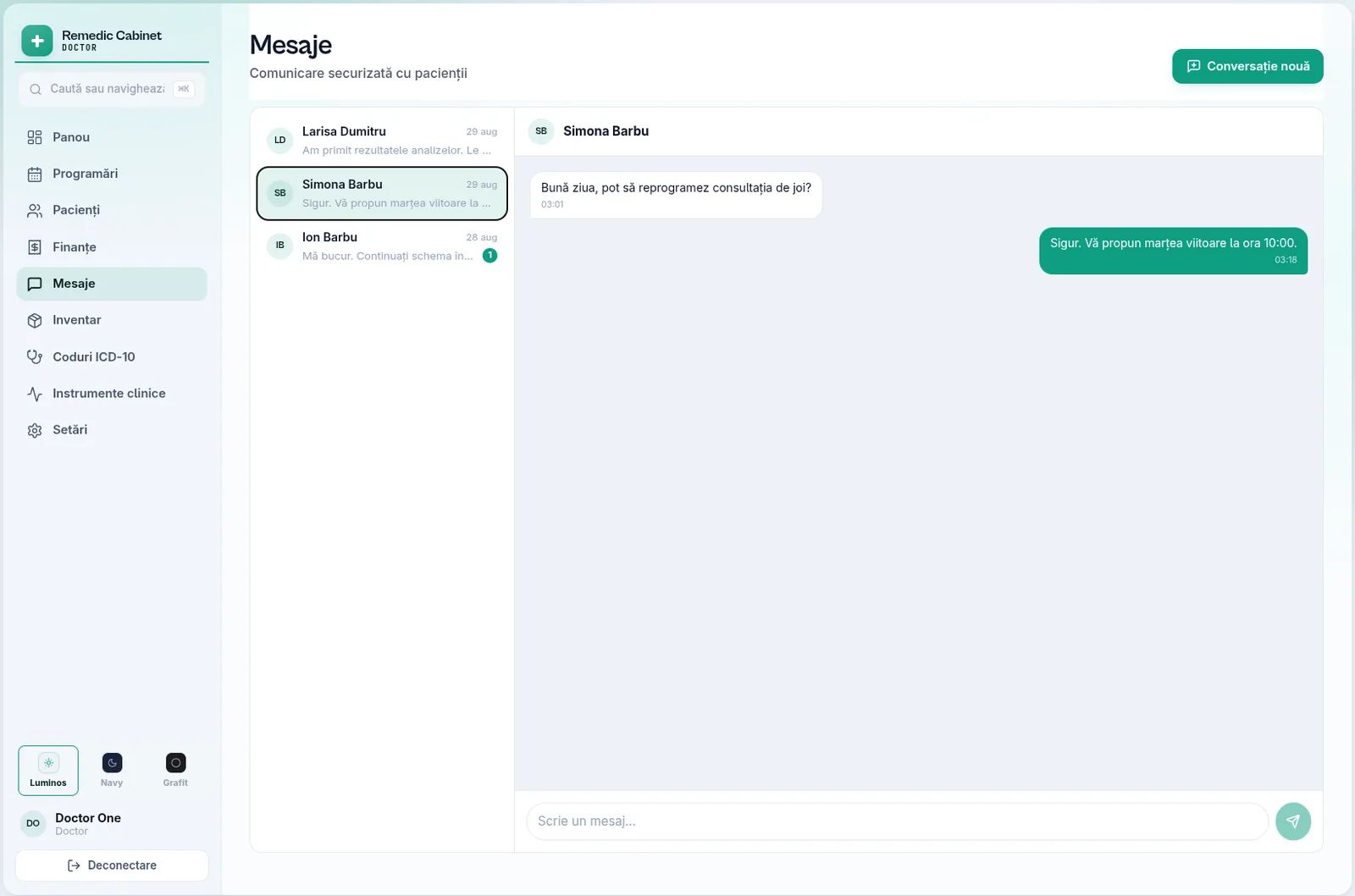
Secure communication attached to the patient’s file. A reschedule takes two messages instead of four phone calls.
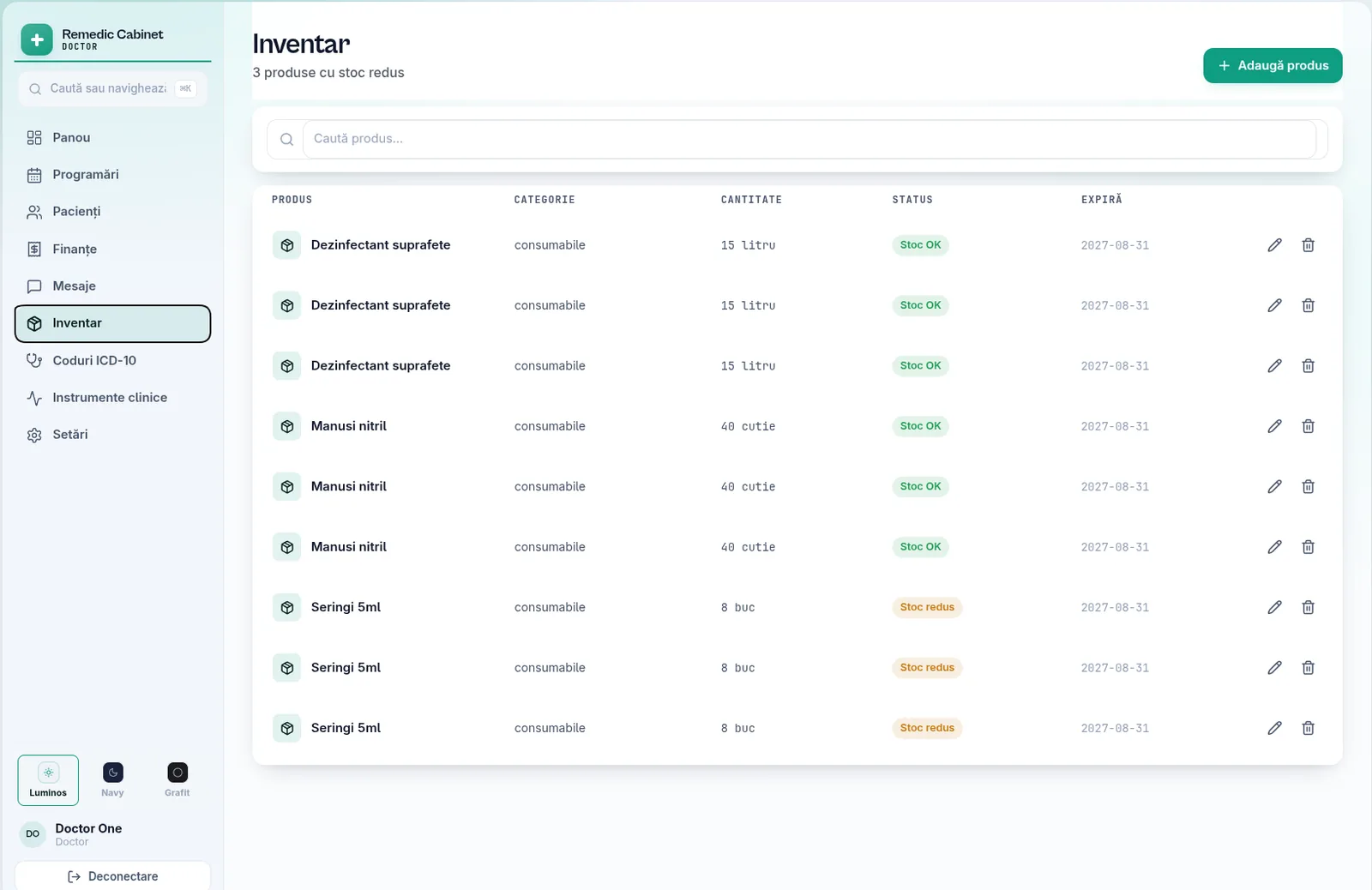
Consumables tracked by quantity and expiry, with low stock flagged before it becomes a problem.
Consultation sections reorder, switch on and get added from settings. Saving creates a new version, and old consultations stay untouched.
Appointments today, confirmed, completed and pending, with the shape of the week and the split by appointment type.
One technical core with three flavours on top of it: Cabinet for medical practices, Dental for dentistry, and Pet for veterinary clinics. Each flavour changes the records, the coding and the booking flow while keeping the same authentication, invoicing and document core. Cabinet is the flavour available now.
The platform is split into separate services — the core, invoicing, the real-time side, transcription — talking to each other over gRPC against contracts written in protobuf and versioned in their own repository. The contract is the source of truth: change a field and the build fails at compile time rather than the client failing in production. Authentication runs through a Keycloak server using authorization code with PKCE; tokens stay in an encrypted server-side session and the browser receives only an httpOnly cookie. The roles inside the token decide what each person may do — the doctor, the nurse and the administrator see different applications out of the same code.
The part I am happiest with is how little the application resembles what I decided. The consultation form is built from settings: drag the sections into the order you actually work in, switch them on or off, add new ones, and choose whether each is free text or a short line. Saving creates a new version rather than rewriting the past: old consultations stay exactly as they were filled in, which in a medical record is not a nicety but an obligation. The same settings hold specialities and procedures, opening hours, document templates and display preferences.
The interface ships three themes — Luminos, Navy and Grafit — and a command palette (⌘K) that searches the menu and the patient list at once, so anywhere is reachable without a mouse. A consultation is opened, filled in by section, and signed on closing. Beside the record sit the clinical tools, which open without leaving the consultation: ICD-10, 999 and ACHI lookup, medicines with their summary of characteristics and interaction checking, clinical scores, a DRG calculator with case-mix index, protocols, classifications and forms. Inventory tracks consumables with expiry dates and flags low stock.
Messages are secure communication with the patient rather than an internal chat: the patient asks to reschedule, the doctor replies, and the thread stays attached to their file. Documents are generated from templates — data processing consent, medical letter, discharge recommendations. Development and testing run exclusively against an anonymised copy of the database that keeps the volume and shape of the real thing with nothing identifying a patient. Registration happens at remedic.app.
Visit the site