

Salon-Manager
Bookings, stock, documents and money for beauty salons.
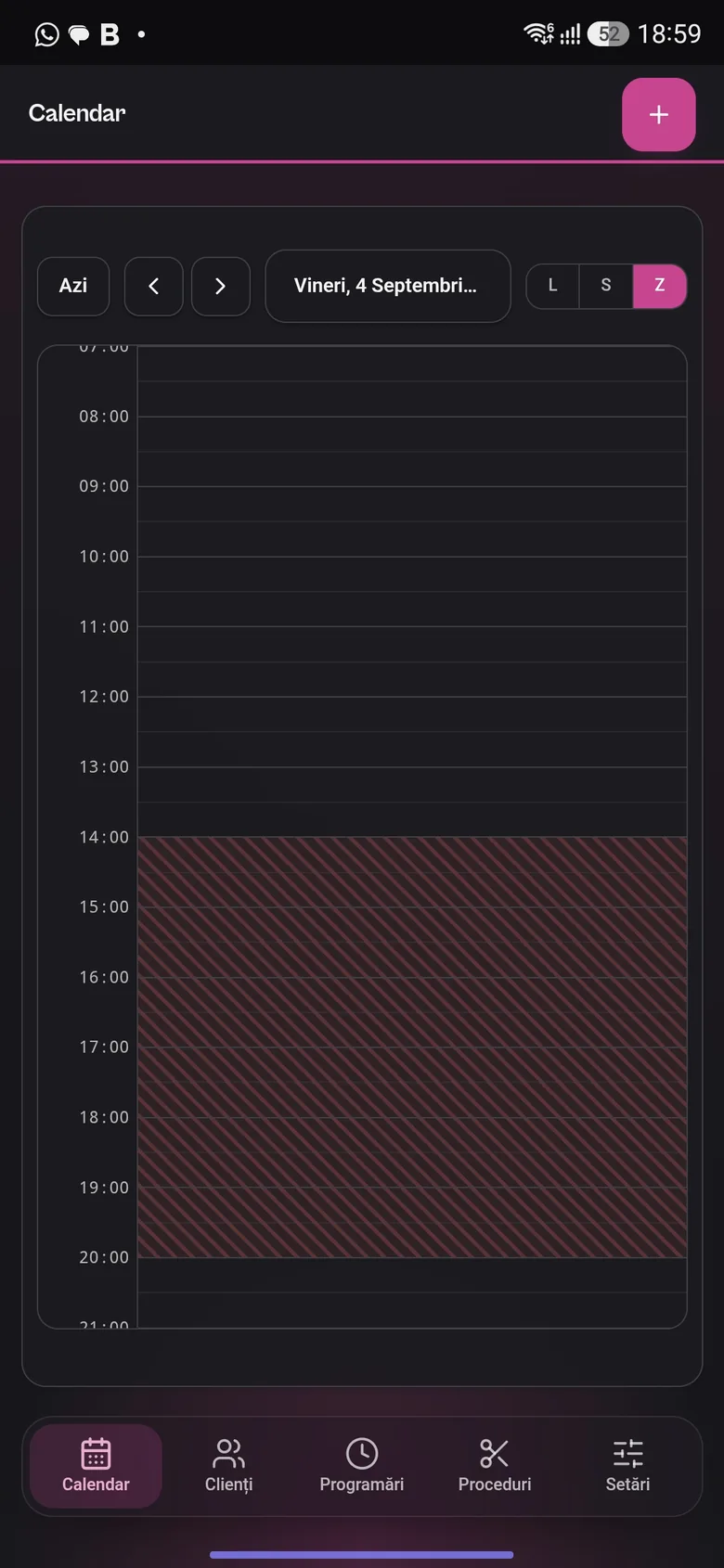
A native mobile app with bottom tabs and the day’s calendar. A salon is not run from a desk.
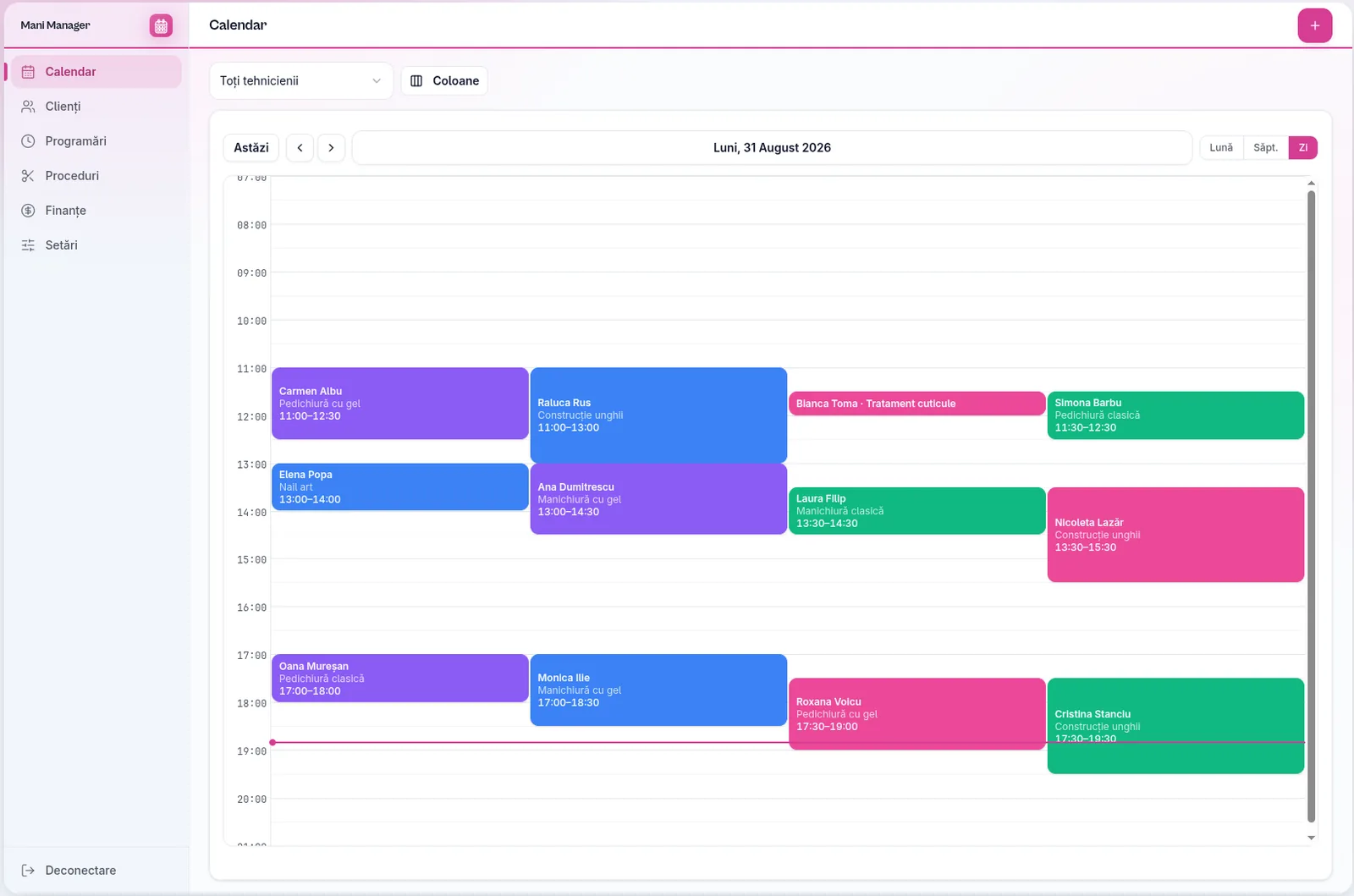
The salon’s day, a colour for each specialist. It also reads by month or week, filtered by who is working.
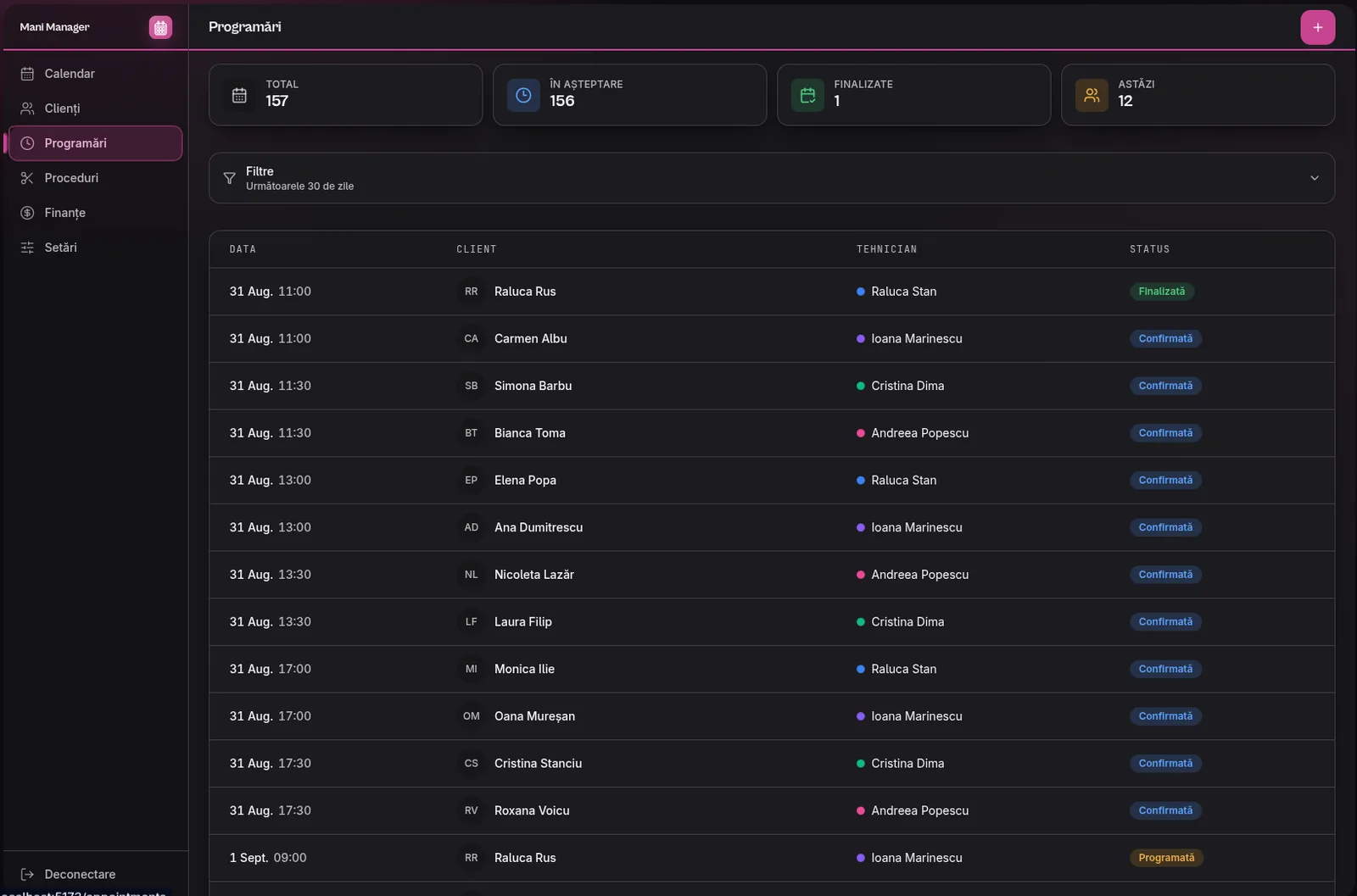
Scheduled, confirmed or completed, filtered by range. The dark theme is one of the three that ship.
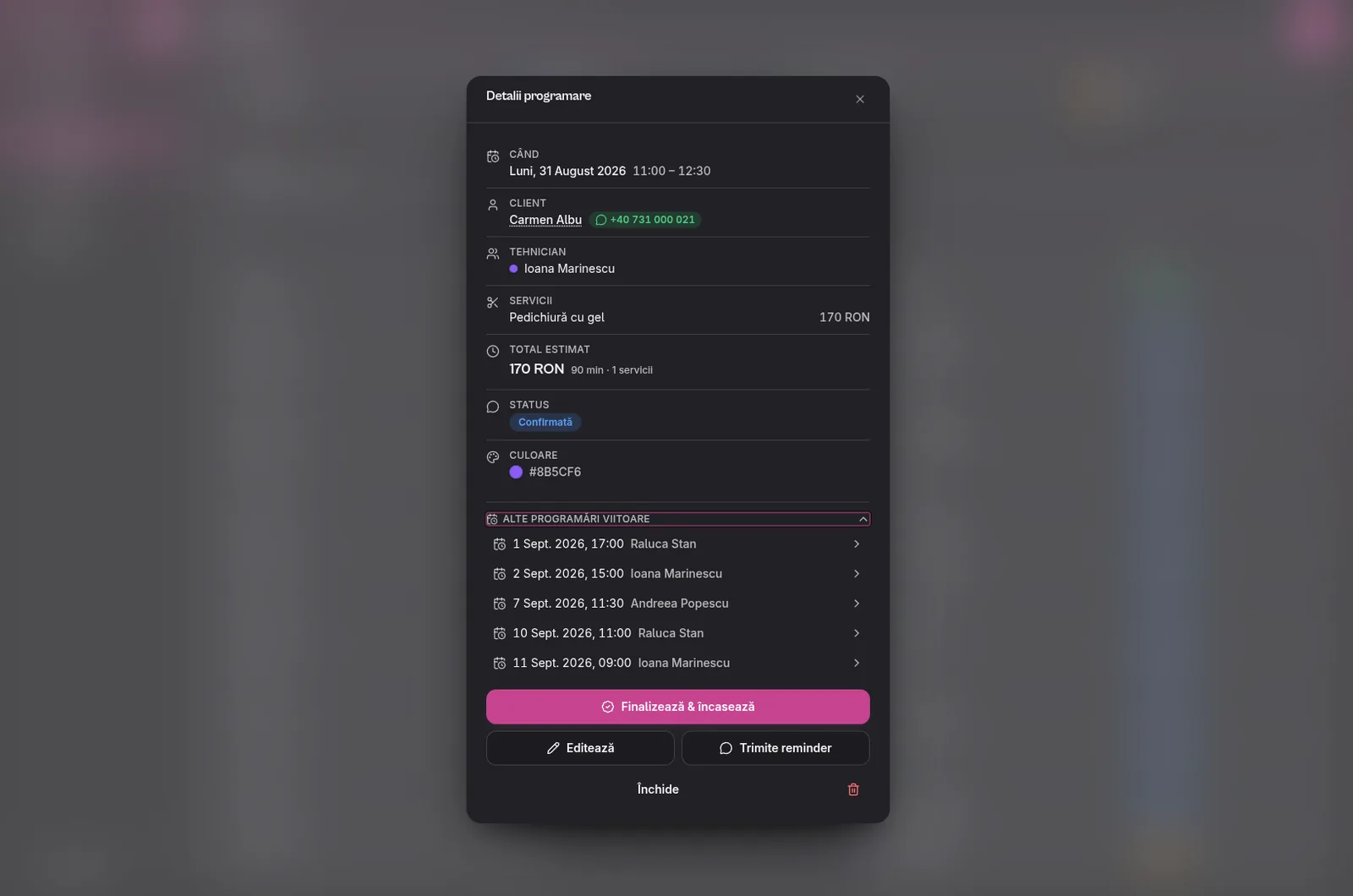
Services with their prices, the estimated total, the client’s other appointments, and one button that closes the booking and records the payment.
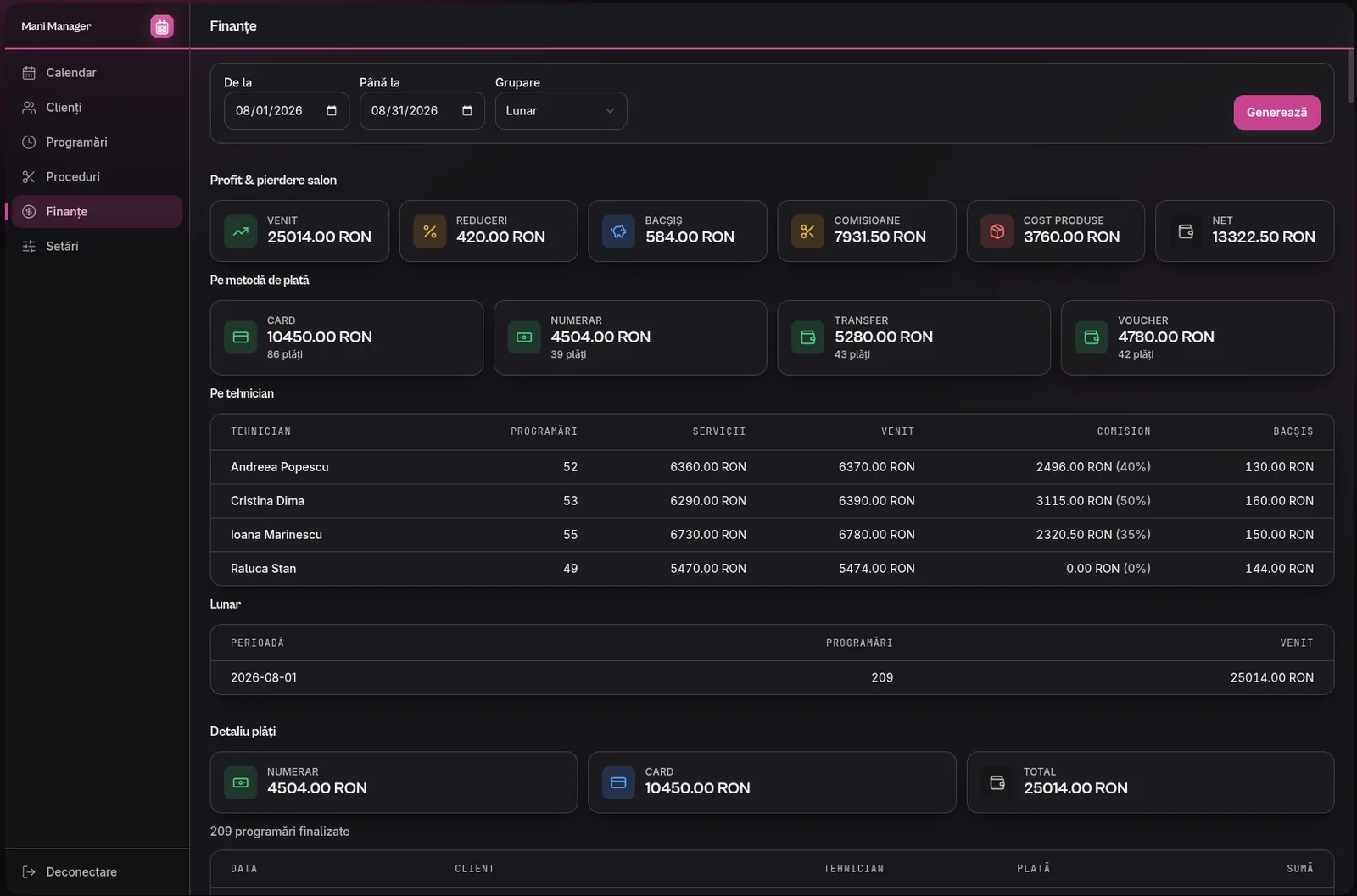
Revenue, discounts, tips, commissions, product cost and net. Broken down by payment method and by technician, each with their own commission rate.
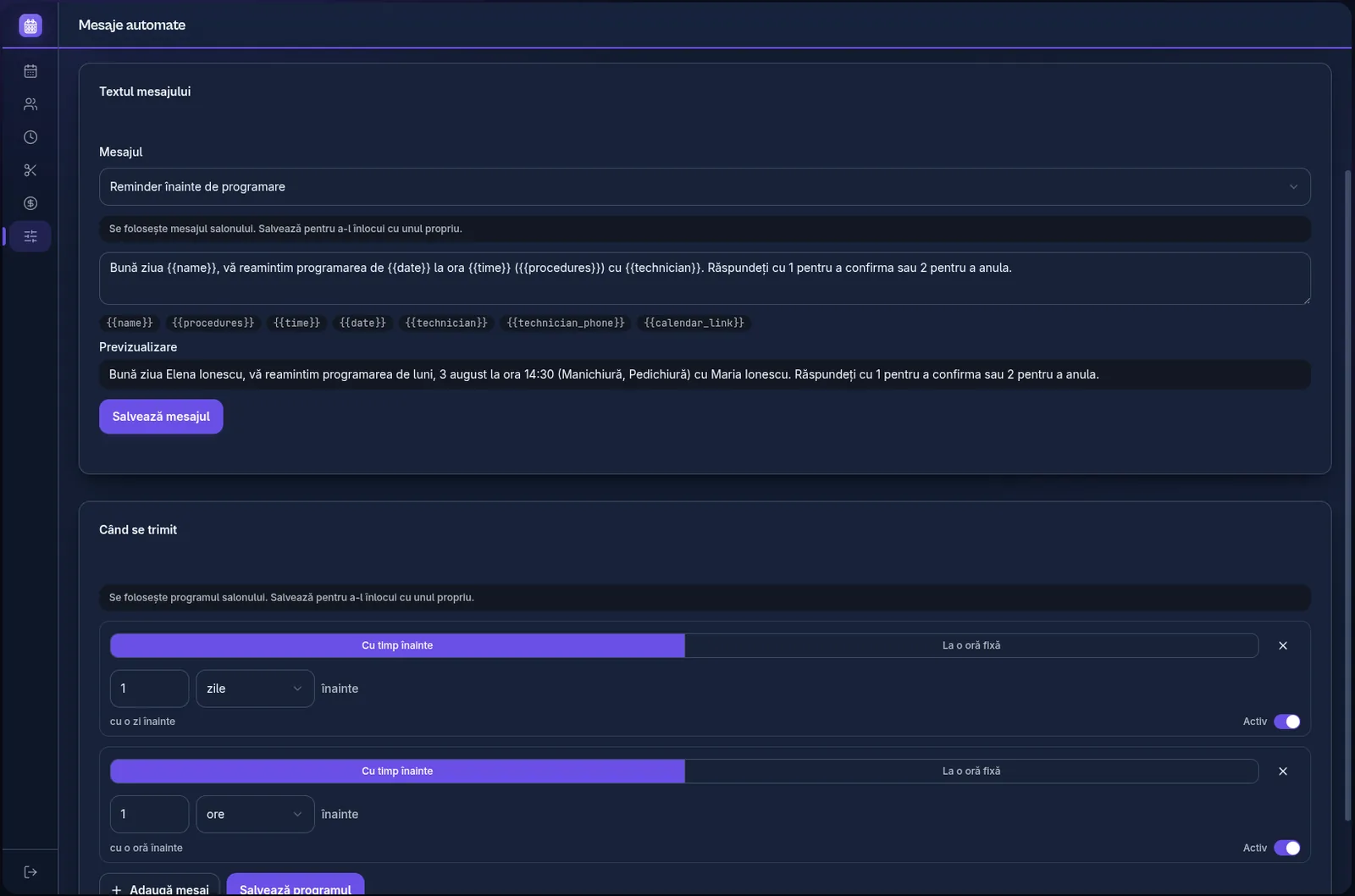
A template with self-filling fields, a preview against real data, and as many send rules as needed: a day before, an hour before, at a fixed time.
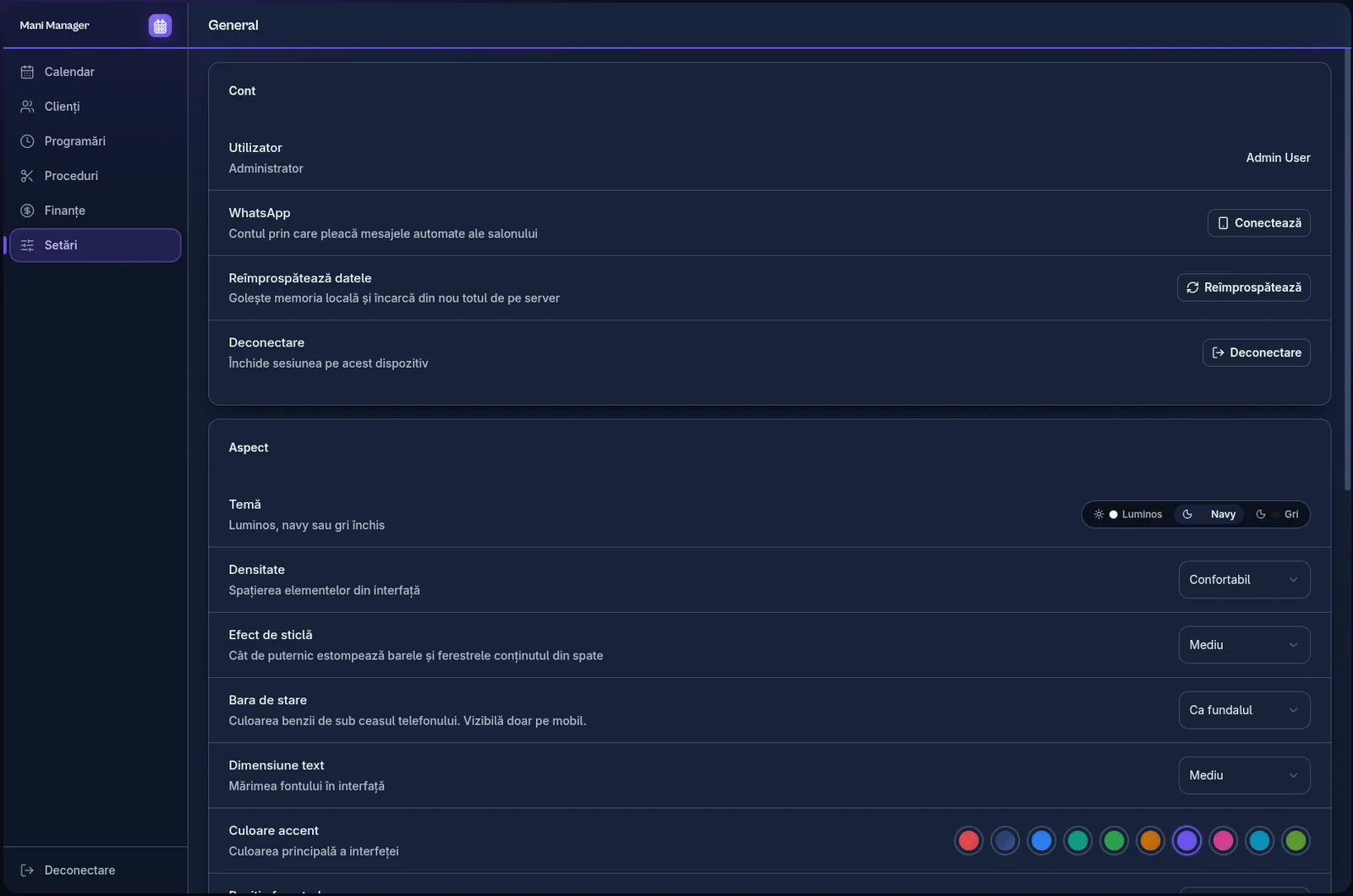
Theme, ten accent colours, density, glass strength, text size, and the colour of the status bar on the phone.
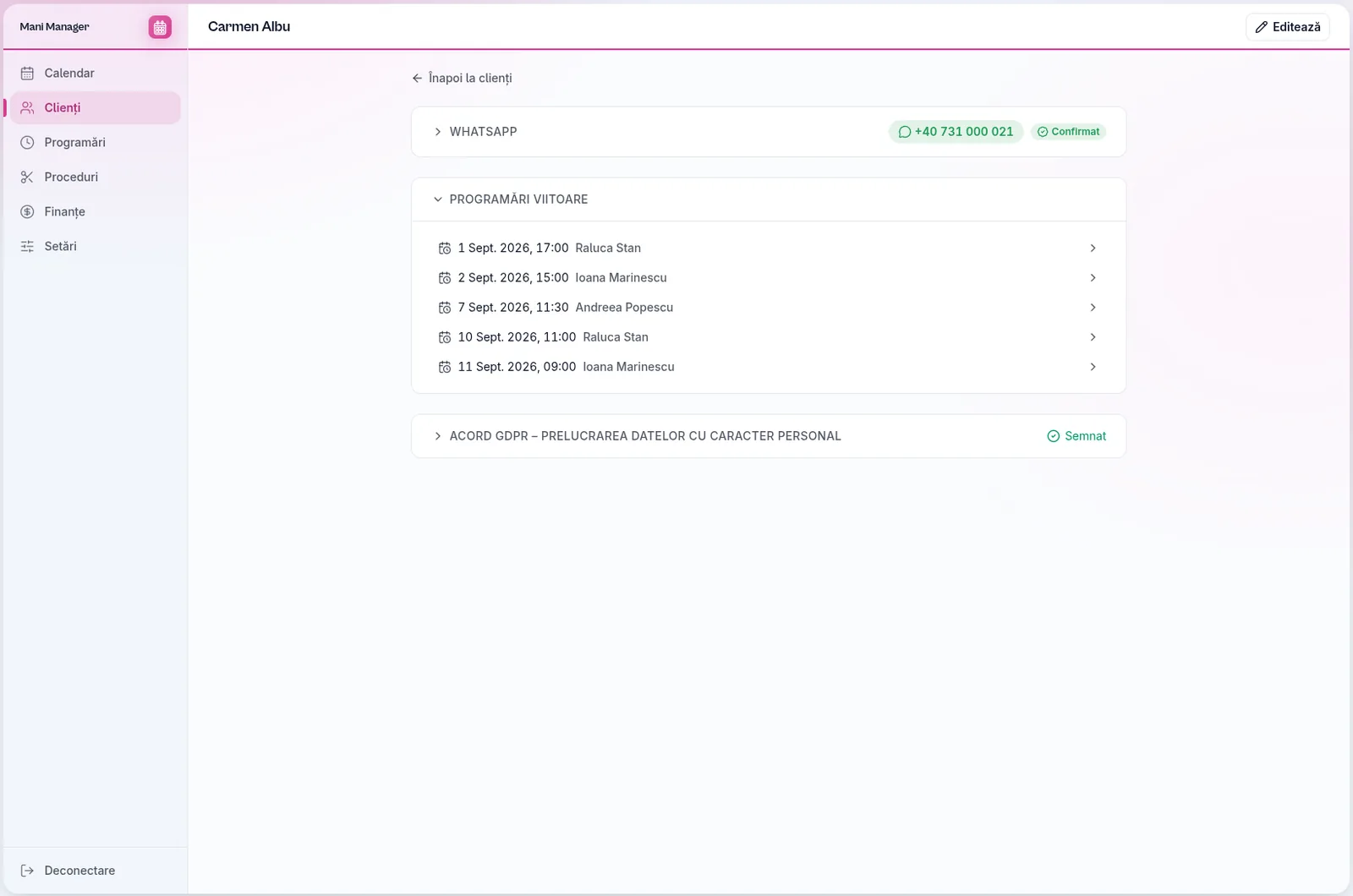
Set out in full inside the client file, with its status — signed or unsigned — and the verified WhatsApp number beside it.
A native mobile app with bottom tabs and the day’s calendar. A salon is not run from a desk.
The salon’s day, a colour for each specialist. It also reads by month or week, filtered by who is working.
Every salon is an isolated tenant: bookings, staff, clients and documents are partitioned so one salon cannot read another’s data, and the partitioning is enforced in the database rather than left to application code. The calendar gives each technician a column and a colour, and reads by month, week or day. An opened appointment shows the client, the technician, the services with their prices, the estimated total and duration, plus that client’s other upcoming appointments — and from the same place you send a reminder or hit “complete and charge”.
The financial side is why a salon trades a paper diary for software. The report runs over any range, grouped monthly, and shows revenue, discounts, tips, commissions, product cost and net — profit and loss, not just takings. It breaks down by payment method, with the number of payments for card, cash, transfer and voucher, and by technician, with appointments, services, revenue, commission and tips. Commission is configured per person, because in salons it genuinely differs: 35%, 40%, 50%, or zero for the owner.
Client communication runs over WhatsApp, where the clients already are. The salon writes its own message text, with fields that fill themselves — name, procedures, time, date, technician, their phone and a calendar link — and sees a preview against real data before saving. The timing is just as open: a day before, an hour before, at a fixed time, as many rules as needed, each with its own switch. The client replies 1 to confirm or 2 to cancel, and the reply lands back in the calendar on its own. Each client file also holds the GDPR consent, set out in full with its status — signed or unsigned — in plain view, and the client list shows at a glance how many numbers are valid on WhatsApp and how many consents are signed.
The interface personalises further than anyone asks for and further than everyone uses once it exists: a light, navy or dark grey theme; ten accent colours; density, meaning the spacing of elements; the strength of the glass effect; text size; and the colour of the status bar under the phone’s clock, which is visible on mobile only. The same page connects the WhatsApp account the salon’s automated messages go out from.
There is a native mobile app too, because a salon is not run from a desk: the same screens, bottom tab navigation, and the day’s calendar with closed hours hatched out. A Go API, an intermediate layer holding authentication that all browser traffic passes through, PostgreSQL underneath, React 19 on the surface, and a separate service for WhatsApp. It runs on Kubernetes with each salon in its own space. Mani-Manager is the personalised instance in production today, at mani-manager.ro.
Visit the site